
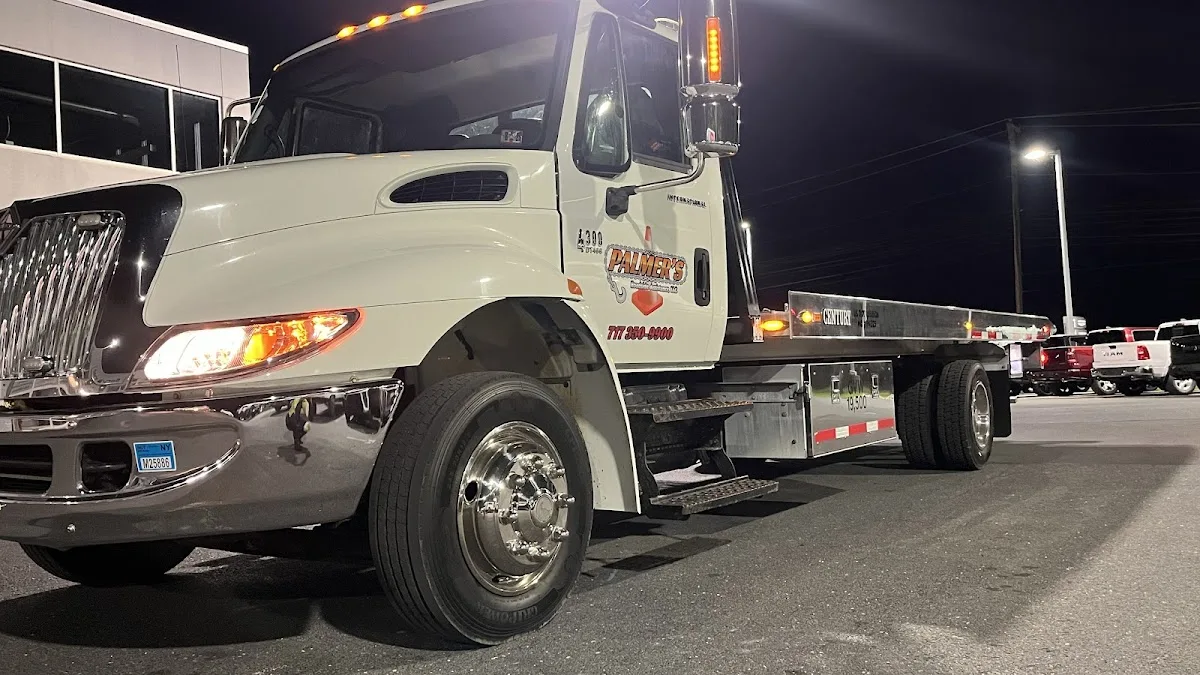
A stalled car does not automatically need a tow. A drained battery or empty tank may call for roadside help, while a vehicle that cannot be driven safely may need transport. Palmer’s Roadside Assistance, LLC identifies its business as Roadside Assistance and lists both towing and roadside help on its official website. For a Harrisburg-area driver, the useful decision is to describe the problem precisely before choosing between a service call and a tow.
Describe what the vehicle can still do
Start with observable facts: does the engine turn over, do the tires hold air, can the car roll, and is there visible collision damage? Palmer’s site lists jump-start service and help with flat tires, drained batteries, and empty tanks, alongside towing. That distinction matters: a jump-start or fuel delivery may address a limited problem, while a car with a damaged wheel, steering issue, or unsafe operating condition may need to be transported instead. Explain what happened and what has already been tried rather than diagnosing the fault yourself.
Give dispatch the vehicle’s make, model, approximate size, and whether it is loaded. Mention low clearance, all-wheel drive, unusual weight, or damage that could affect loading. Those details help the operator determine what equipment and method may be appropriate. The site specifically lists wheel-lift towing; if the vehicle’s design or condition makes you think another method, such as a flatbed, may be needed, ask whether that equipment is available for this call. Do not assume every truck can handle every vehicle.
Make the pickup and destination unambiguous
“Harrisburg” is not enough information for a roadside pickup. Provide the road name, direction of travel, nearest exit or cross street, and a safe landmark. On a highway, explain whether the car is on a shoulder, in a lane, or at a nearby lot; share a map pin when possible. If the vehicle is in a garage, private lot, or difficult-to-reach position, say so before dispatch so access conditions can be considered.
Then state where the vehicle should go. Palmer’s website says it can tow a car to a preferred repair shop or another location in the Hampden Township and Harrisburg area, and describes service in surrounding areas. This is useful context, not a guarantee that every pickup or destination is covered. Confirm both addresses with the operator, especially if the route extends beyond the immediate area. If a shop is the destination, check whether it is open and able to receive the vehicle; ask what to do if it is closed when the tow arrives.
Clarify the quoted amount before agreeing
The official website lists a light-duty towing truck dispatch fee starting at $110. That figure is a starting dispatch fee, not necessarily the total cost of a particular tow. Before accepting service, ask what the estimate includes and what could change it: mileage, loading difficulty, waiting, winching, after-hours conditions, or the requested destination. Confirm whether the stated amount is an estimate or a final quote, and whether any additional charges require approval.
For a roadside request rather than a tow, ask what service is being dispatched and how its charge is calculated. If the car needs recovery from a ditch or another off-road position, describe the exact location and ask whether winching is available for that situation; the company’s website excerpt lists towing and roadside services but does not establish that every recovery setup is offered. A clear description is more useful than assuming a familiar service label covers an unusual scene.
Use public listing details as prompts, not promises
The public listing reports a 4.9 rating from 105 reviewers, a useful indication of customer feedback volume but not evidence of current truck availability or a particular outcome. Call +1 717-350-9900 to discuss the immediate job and confirm the details directly. The company website also displays this number and publishes a weekly hours panel showing 24 hours Monday through Saturday and Sunday closed. Because hours and live dispatch availability can change, verify whether a truck can take the call at the time you need help rather than treating a listing label as a real-time commitment.
Ask for a realistic arrival estimate and what could affect it, but distinguish an estimate from a guarantee. The website’s statements about fast response are promotional and do not specify a response-time commitment. A useful dispatch conversation identifies the vehicle, exact location, requested service, destination, expected charges, and an arrival window the operator is willing to provide.
Keep the roadside scene and handoff orderly
While waiting, prioritize personal safety over preparing the vehicle. If the car is exposed to moving traffic, follow local emergency guidance and do not stand where passing vehicles could reach you. Keep keys and any ownership or authorization information available, and tell the operator if someone else is coordinating the tow. Before loading, confirm the destination and how the vehicle will be released there. If the plan or price changes after inspection, pause to understand the change before authorizing additional work.
For Palmer’s, the decision starts with a practical distinction: can a listed roadside service address the problem, or does the car need transport? Clear vehicle details, exact pickup and drop-off points, and a direct conversation about equipment, timing, and cost make that decision more concrete without assuming what a particular truck can provide.


