
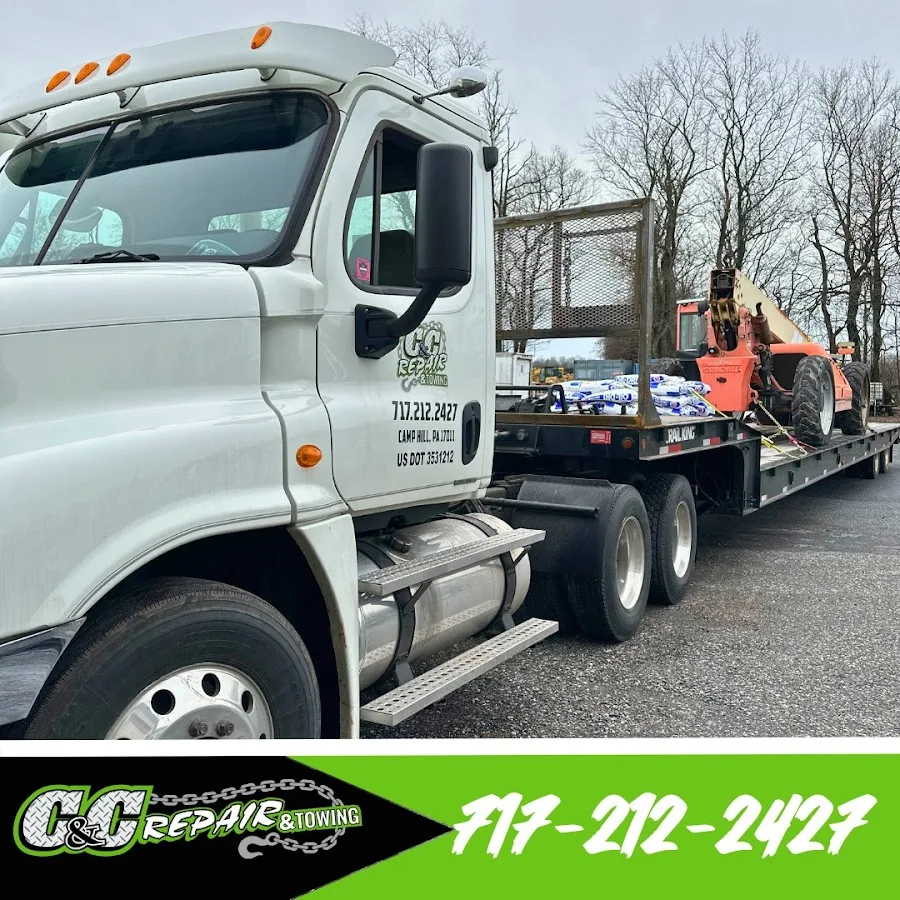
A vehicle that will not move creates two separate decisions: what kind of help fits the problem, and whether a particular provider can handle the pickup as it stands. C&C Towing is listed as a light-duty towing provider, with a Camp Hill address and public contact details. Those facts are useful starting points, but they do not establish which truck is available, how quickly it can arrive, or whether a specific roadside situation is within reach. A short, precise call can turn the listing into a meaningful option rather than an assumption.
Read “light duty” as a category, not a truck assignment
The listing identifies C&C Towing as Light Duty Towing. That label can help a driver frame a request for an ordinary passenger vehicle, but it does not confirm the equipment that will be sent. Before agreeing to a tow, describe the vehicle by year, make, model, and drivetrain, then explain whether it starts, rolls, steers, and has all its wheels. Mention low clearance, collision damage, a locked steering wheel, missing keys, or a tight parking structure if any apply. These details help dispatch determine whether the proposed towing method is suitable.
Ask directly whether the planned truck can load the vehicle in its current condition and whether a flatbed is appropriate or available. A car that rolls freely on a level lot presents a different loading problem from one with a seized wheel or one sitting off pavement. If the vehicle is stuck, explain the ground and access conditions before asking about winching; the label alone does not establish recovery equipment or capability.
Separate a roadside fix from a transport request
Not every breakdown needs a tow. A vehicle that remains safely parked and has a simple starting or tire problem may call for roadside assistance, while a vehicle that cannot be driven safely may need transport. The local listing contains common-service references such as jump-starts, lockouts, tire changes, fuel delivery, and winch-out, but a directory entry is not confirmation that each service is available for a particular call. Ask what help can be dispatched now and whether the proposed service is a repair attempt, a recovery, or a tow.
Explain the symptom rather than naming a solution too early: for example, say whether the engine turns over, whether a tire is damaged, or whether the vehicle is immobilized. If the answer is a tow, provide both the exact pickup point and the intended destination. A highway entrance, parking-lot level, direction of travel, nearby cross street, and safe landmark can make a location clearer than a town name alone.
Use the Camp Hill details carefully
The public record gives C&C Towing’s address as 1850 State Rd, Camp Hill, PA 17011, United States. That is a listing address, not proof that a truck is currently stationed there or that the disabled vehicle is nearby. The record also associates the business with Harrisburg, so drivers should give dispatch the actual vehicle location rather than relying on either city label to define coverage.
The listing shows a 4.1 rating from 14 reviewers. That is a limited set of public feedback, not a measure of current truck availability or a guarantee about a particular job. Treat it as one comparison point. More useful for an urgent decision is whether the dispatcher can clearly repeat the vehicle details, pickup location, destination, and service being quoted.
Get the cost and timing assumptions stated
Before authorizing a truck, ask for an estimated arrival window and a price range tied to the details you supplied. Clarify what the estimate includes: dispatch or hookup charges, mileage, winching or difficult access, tolls, and the final drop-off point may affect the total. If the dispatcher cannot quote a firm amount before seeing the vehicle, ask which conditions could change it and how any added charge will be explained before work continues.
The listing displays a 24-hour availability signal, but that should be treated as a prompt to contact dispatch, not proof that a driver and appropriate truck are free at this moment. C&C Towing’s listed phone number is +1 717-638-1262. When calling, ask whether the pickup address is within current coverage, whether the ETA is an estimate or a confirmed window, and whether the requested vehicle can be handled with the equipment being sent. The business’s service-request page is listed at https://candctow.com/request-service/; for an urgent roadside situation, verify the live contact route and response directly.
Make the handoff as specific as the pickup
Once a tow is agreed, confirm the destination’s full address and the correct entrance or drop area. If a repair shop or property is receiving the vehicle, check its hours and whether it can accept an after-hours drop. Tell the dispatcher about access restrictions, a gate, a low garage ceiling, or a vehicle owner who will not be present. Keep keys and any relevant authorization information ready, and repeat the vehicle description so the driver is not sent with an incomplete picture.
C&C Towing’s Camp Hill listing offers concrete points to verify: a light-duty category, a public address, a phone number, and a modestly sized review record. The right decision still depends on the live conversation. Confirm service fit, coverage, truck type, timing, and price assumptions before relying on a tow plan.


