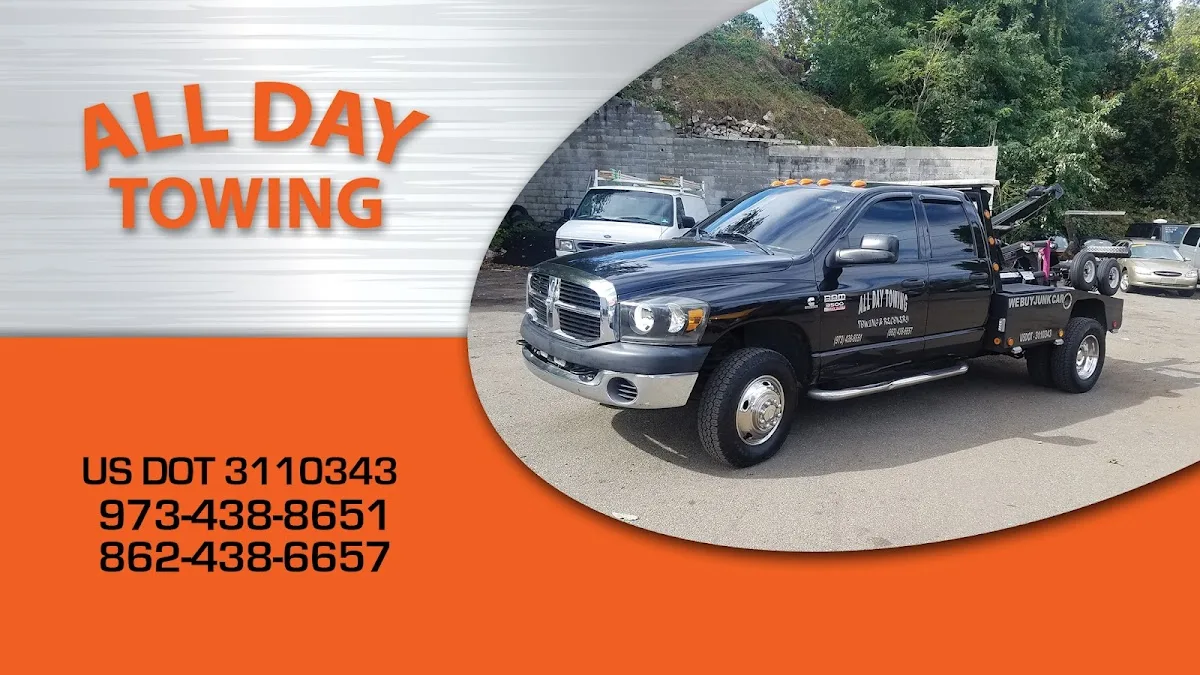
A useful tow request gives dispatch enough detail to judge the vehicle, pickup conditions, and destination before a truck is assigned. For All Day Towing in Newark, the company website describes towing and roadside assistance in the area, including accident towing, jump starts, and light- and medium-duty towing. Its listing identifies the business at 692 Broadway, Newark, NJ 07104, and gives +1 973-438-8651 as its direct phone number. Those details help identify the provider, but the right equipment, current availability, and job price still depend on the specific call.
Give dispatch a location the driver can reach
Start with the vehicle’s exact position: street address or nearest cross street, direction of travel, and a visible landmark. For a highway pickup, give the route, direction, exit or mile marker if known, and whether the vehicle is on a shoulder or in a travel lane. If your location pin is imprecise, explain what the driver should look for rather than assuming the map marker will lead directly to the car.
Describe access conditions that could affect the approach. Mention a parking-garage height limit, narrow driveway, gate, security desk, loading area, or restricted lot, along with any entry instructions you are authorized to share. Explain whether the vehicle is on level pavement, in a ditch, or otherwise difficult to reach. On a busy road, stay out of traffic while communicating the details; do not put yourself at risk to inspect the vehicle or find a better landmark.
Describe the vehicle and what happened
Give the year, make, model, and body type, then say whether it is damaged, disabled, stuck, or involved in a collision. Explain whether it rolls and steers, and mention a blocked or damaged wheel, low clearance, unusual dimensions, or modifications. If you know the approximate weight or are towing a work vehicle, trailer, or specialized equipment, include that information. For an electric vehicle or one with manufacturer-specific towing instructions, tell dispatch and consult the vehicle guidance where practical.
All Day Towing’s website describes light-duty towing for cars, SUVs, and light trucks, as well as medium-duty towing for vans and small box trucks. It also lists accident towing, recovery, and specialized-equipment hauling. A separate Towing.com listing includes additional categories such as flatbed towing and winch and recovery. These descriptions provide useful context for the call, but they do not establish that a particular truck is available or suitable for every vehicle. Describe the vehicle honestly and ask whether the proposed equipment and handling fit its condition.
Understand the estimate before authorizing the tow
Give dispatch the intended drop-off address before agreeing to a price. Ask for the estimated total and what it covers, including whether distance, hookup, recovery work, or a change in destination could affect the amount. If access is difficult or the vehicle condition is uncertain, describe that up front and ask how it might change the estimate. The supplied business pages do not state a price for your particular job, so do not treat a general figure as a quote.
Find out how payment will be handled and whether the estimate can be sent by text or another available method. If the vehicle is on private property, at a repair facility, or subject to an impound or release process, check the site’s requirements separately; those rules or charges may be controlled by someone other than the towing provider. Keep the estimate and any agreed changes available for reference.
Set expectations for arrival and vehicle handoff
The company website describes its service as available 24/7, while the Towing.com listing says hours are not available. Because those published signals differ, call to confirm whether dispatch can take your request now and ask for a realistic arrival estimate. Clarify how the driver will identify the pickup point and contact you if the plan changes. All Day Towing’s local listing shows a 4.5 rating from 34 Google reviews; that can offer background, but it cannot predict live availability or the outcome of a particular call.
Confirm the destination and make sure the receiving shop or other location can accept the vehicle. Ask what keys, documents, or authorization are needed, particularly after a collision or when another person controls access to the vehicle. Before it is loaded, note any visible damage if you can do so safely, and keep the destination and agreed terms together. At drop-off, request a receipt or other record of the service and where the vehicle was taken.
Stay safe while waiting for assistance
Once the request is arranged, move to a protected place if you can do so safely. On a road, use a barrier when one is available and avoid standing between the vehicle and passing traffic. Keep your phone reachable and tell dispatch if your position changes. These preparations make the call more precise without assuming that a directory entry can confirm the conditions at your roadside location.