Before agreeing to a tow, look for an estimate that describes the job and explains how its total is built. A number without a defined pickup, destination, vehicle, and type of service is difficult to compare with another quote. The goal is not to predict every detail of a roadside call; it is to understand what the quoted amount covers and what could change it.
Define the job the estimate covers
Start by making sure the estimate is tied to your specific vehicle and trip. Give the vehicle type, its pickup location, and the destination you have in mind. These details establish what is being moved and where the tow is expected to end. Two estimates can sound similar while describing different routes or different work.
Then distinguish transportation from roadside assistance. A request for a tow is different from asking for a jump-start, tire change, fuel delivery, lockout help, or winch-out. If roadside help might get the vehicle moving, ask whether the quoted amount is for that service, a tow, or one option followed by another. Do not compare a roadside service charge with a transport estimate as though they cover identical work.
Describe conditions that affect how the vehicle can be reached or loaded. For example, say a car is in a tight parking area and cannot roll: that is a different work description from a car parked in an open space with wheels moving freely. Mentioning blocked access or a non-rolling vehicle lets the estimate refer to the situation you actually have, rather than an uncomplicated pickup.
Separate the base charge from distance
Ask what the base, hookup, or dispatch charge includes. It may represent the initial service or loading portion of a tow, while mileage is calculated separately; the exact arrangement varies by provider. Clarify whether a base charge applies even when the destination is nearby and what event starts the mileage calculation. The estimate should make the parts understandable, not leave you to infer them from a single total.
Distance can be counted in more than one way. Ask where the mileage calculation begins and whether it includes only the loaded trip from pickup to destination or other travel as well. A quote based on a short loaded route will not compare fairly with one that includes a different mileage basis. If you are considering more than one destination, make sure each estimate uses the same endpoint.
A simple comparison helps expose the difference:
| Estimate element | What to identify | Why it matters |
|---|---|---|
| Base or hookup | What initial work it covers | Shows the charge before distance |
| Mileage | Starting point and distance counted | Makes route costs comparable |
| Additional work | Conditions or tasks that add labor | Separates transport from extra handling |
Identify extra work and destination charges
Ask which circumstances could change the quoted scope. Difficult access, loading assistance, special equipment, or additional labor may be treated differently from a straightforward tow. The useful question is not whether every possible complication is included; it is which particular conditions trigger an additional charge and how that work is described in the estimate.
Keep the destination in view, too. A tow estimate may cover transport while a receiving location has separate drop-off, access, or storage costs. Those costs may be billed by someone other than the towing provider. Ask whether the quoted amount includes any destination-related charge and who would collect a separate one. That distinction matters when comparing a direct trip to a repair facility with a delivery to another kind of location.
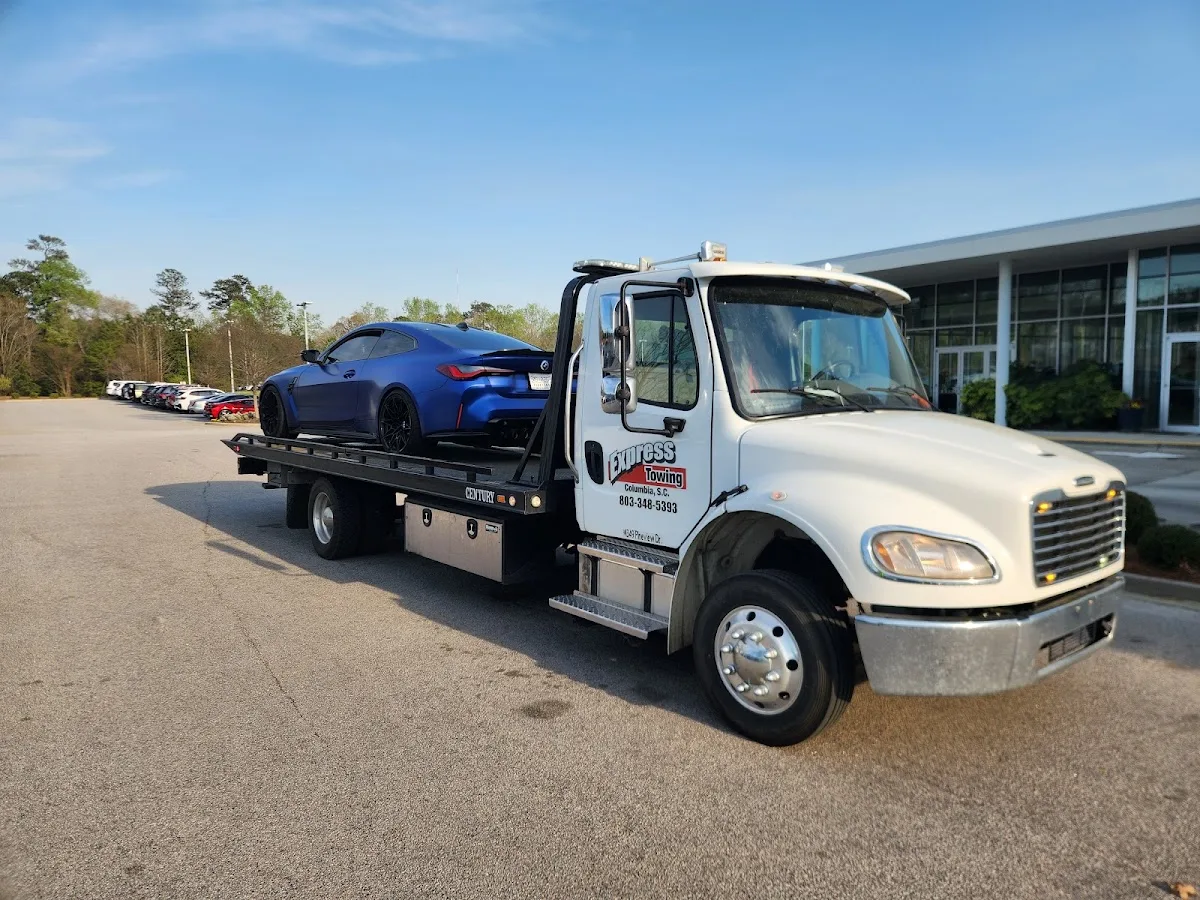
For a local contact reference, you can find details for Express Towing in Columbia.
Compare like-for-like totals and record approval
Put estimates side by side only after matching the vehicle, pickup, destination, service, mileage basis, and included work. A lower starting figure may not mean a lower expected total if it excludes distance or describes fewer tasks. For instance, if one quote covers a roadside jump-start and another covers a tow to a repair shop, the difference is the work being purchased, not necessarily a better deal.
Before authorizing the work, keep a written note or message showing the quoted amount and what it includes. If the actual situation requires work outside that scope, the estimate should give you a basis for understanding the proposed change. Ask how the provider will explain added work and obtain your approval before it proceeds; a changed scope should not be confused with the original quote.
Imagine two estimates for the same car and destination. One lists a base charge plus a stated mileage basis; the other gives only a total. Even if the second number is lower, it offers less information for judging whether the trips are equivalent. Requesting the missing breakdown turns the comparison into one about matching services, routes, and included tasks rather than guesswork over headline prices.