A winch-out and a tow address different parts of a roadside problem. Winching is an extraction: a recovery operator uses a pulling action to reposition a stuck or immobilized vehicle. Towing is transportation to another location. A vehicle can need one, the other, or an extraction followed by a tow, depending on where it is and whether it can travel afterward.
Extraction and transportation solve different problems
Think of a winch-out as changing the vehicle’s position, not choosing its destination. A vehicle that has slid off a driveway or become stuck beside a roadway may need to be pulled back to a place where it can be evaluated. That movement alone does not take it to a repair shop, home, or another destination. If it cannot be driven after recovery, towing may be the next part of the job.
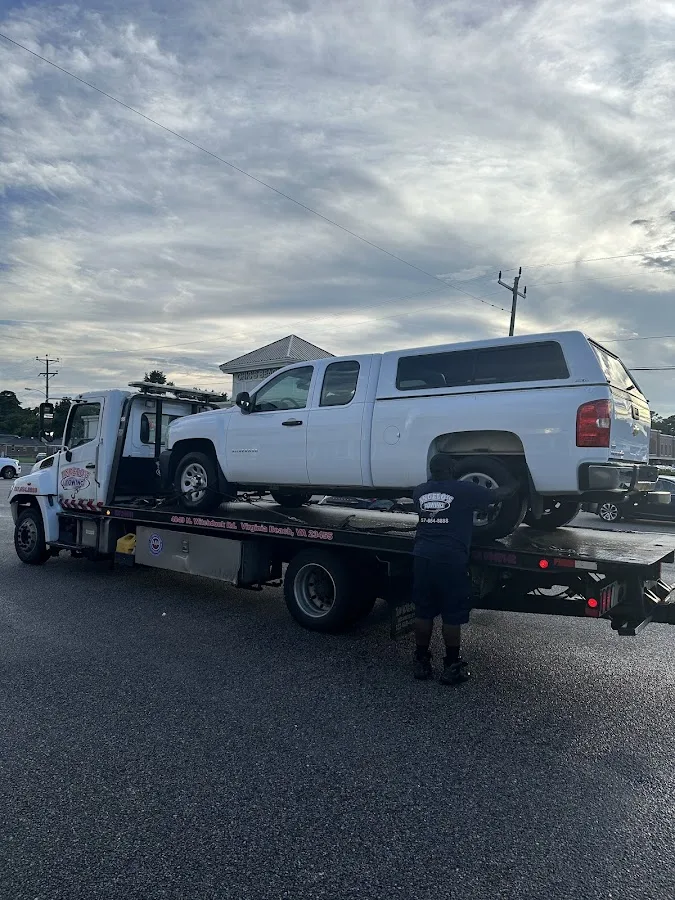
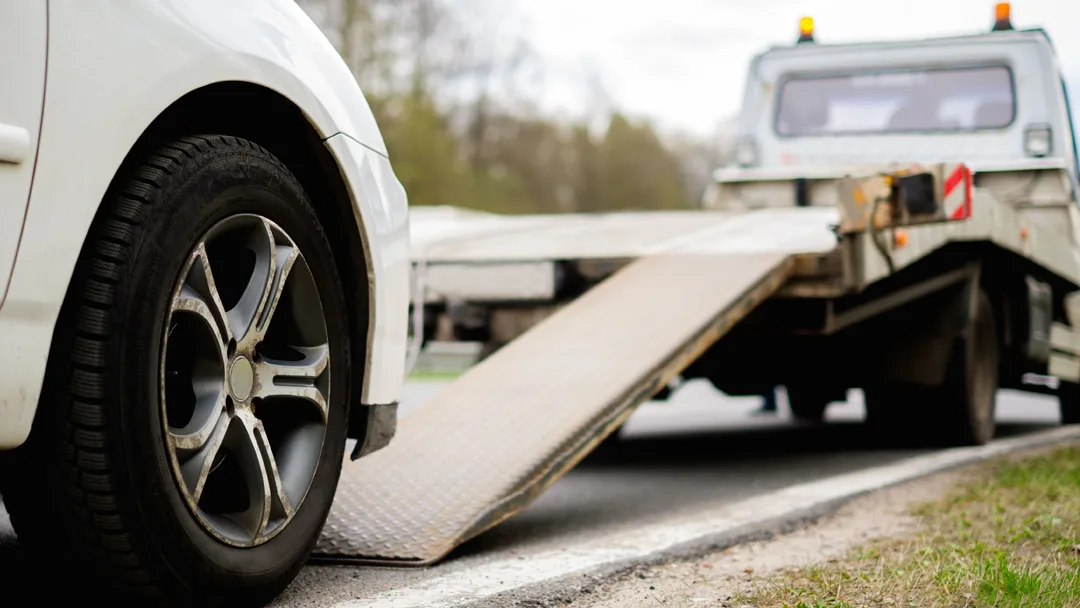
By contrast, a standard tow is intended to move a vehicle from one location to another. The need for a tow does not necessarily mean the vehicle is stuck: a mechanical problem, collision damage, or another reason it cannot be driven may call for transportation without an extraction. In a hypothetical example, a car that is immobilized on a paved shoulder could need a tow, while a car whose tires are trapped in soft ground may first need a winch-out. If the second car remains inoperable once free, extraction and transport are separate tasks.
This distinction helps clarify what kind of help to request. “My car needs to be moved to a garage” describes a destination and transport need. “My car is stuck off the road and cannot get back onto the pavement” describes an extraction problem. Some incidents involve both.
The vehicle’s position and the surrounding scene shape the approach
The same vehicle can present very different recovery challenges depending on its position. A car on relatively level ground with open access is a different situation from one sitting at an angle, deeply embedded, or on a slope. Position affects where a professional can approach and how much working room is available. It can also help explain whether the request is simply to get the vehicle unstuck or to move it farther.
The surface and surroundings matter too. Soft ground, snow, mud, or loose material can affect how the vehicle is held in place. Nearby barriers, parked vehicles, trees, walls, and narrow access points can limit room around it. A vehicle close to moving traffic presents a different scene from one well away from the roadway, because the available working area and exposure to traffic are not the same. These are reasons an operator may need a clear description or a look at the scene before determining a practical recovery plan; they are not do-it-yourself winching instructions.
Photos, when it is safe and practical to take them, can communicate details that are hard to describe, such as the vehicle’s angle or nearby obstacles. The useful information is about the whole scene—not just the vehicle’s make and model.
Vehicle condition matters as much as where it is stuck
Visible damage, a wheel that will not roll, or steering that does not work normally can mean a vehicle needs a tow after extraction. Getting it free does not repair damage or establish that it is safe to drive.
Describe the scene so the request matches the problem
When contacting a towing or roadside provider, begin with the vehicle’s exact location and how it is positioned: for example, whether it is on the roadway, on a shoulder, off the pavement, or on private property. Describe what it is resting on or near, the amount of room around it, and any slope or nearby traffic that changes access. These details help distinguish a winch-out request from a straightforward tow and explain why the scene may require a particular recovery assessment.
Then describe the vehicle’s condition in practical terms: whether it appears damaged, whether the wheels can roll, and whether it can steer. If the final destination is already known, mention that as well; recovery from the stuck position and transportation to that destination are not automatically the same service. A concise, accurate account is more useful than guessing a technical name for the equipment or method.
For a Charleston-area listing, visit Mountain Auto Towing & Recovery’s detail page.